All ASFP publications and documentation is free for the public to use, except the ASFP Colour books that are £45 for the public and only free to ASFP Members.
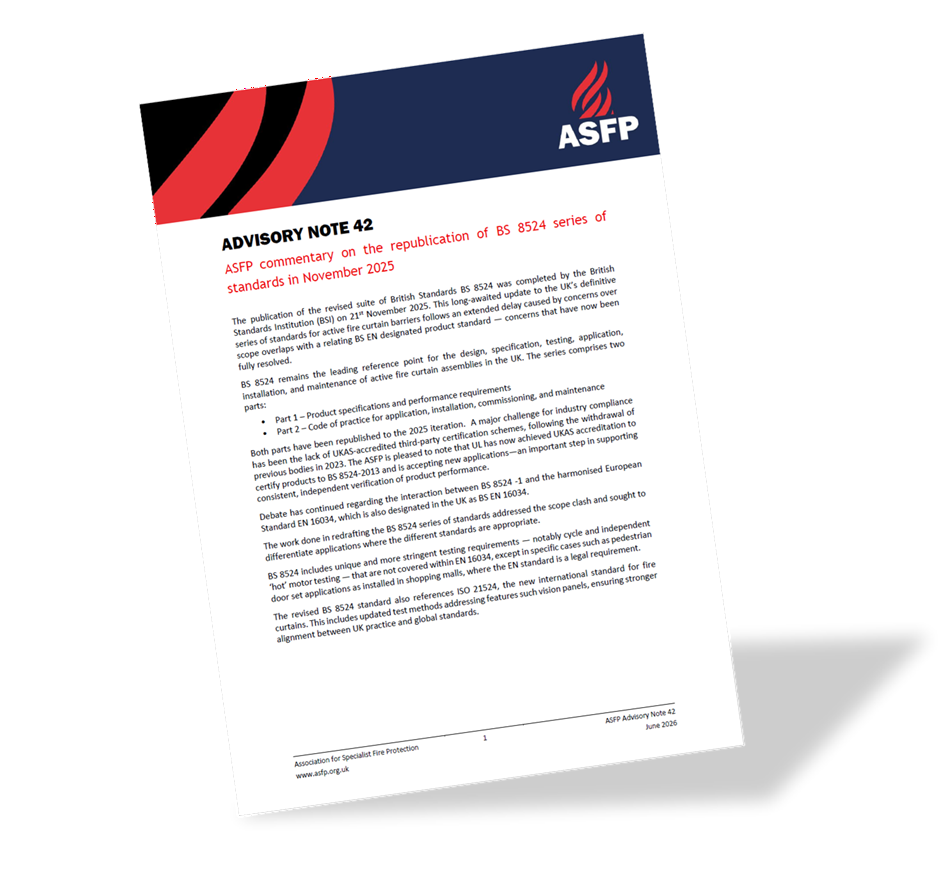
ASFP Advisory Note 42 - June 2026
ASFP Advisory Note 42 - ASFP commentary on the republication of BS 8524 series of standards in November 2025Following the publication of the revised BS 8524 series of standards, this Advisory Note provides a summary of the changes and the performance criteria addressed.
ASFP Advisory Note 41 - June 2026
ASFP Advisory Note 41 - Guidance for those involved in the early-stage design of Passive Fire Protection – Service Penetration Seals, including ArchitectsThe purpose of this guide is to give architects, MEP consultants and spatial planners a few simple guidelines to help with discussions in RIBA Plan of Works Stages 2 and 3. Use of these guidelines will help to mitigate some of the design decisions that hinder a successful outcome.
ASFP Advisory Note 38 - January 2026
ASFP Advisory Note 38 - ASFP position on use of Critical Temperatures within 6th Edition of the Yellow BookThis document outlines the ASFP position on using the Critical Temperatures given in the recently published 6th Edition of the Yellow Book.
ASFP Advisory Note 37 - January 2026
ASFP Advisory Note 37 - ASFP position on use of multiple assessment methods and data sets for passive fire protection for structural steelThis document outlines the ASFP position on using multiple methods and data sets when conducting assessments for passive fire protection of structural steel.
ASFP Advisory Note 36 - March 2025
ASFP Advisory Note 36 - ASFP Position on Smoke Shaft Construction MaterialsThis document outlines the ASFP position on using gypsum based shaft wall systems.
ASFP Advisory Note 35 - January 2026
ASFP Advisory Note 35 - Guidance on Test Evidence of Passive Fire Protection SystemsThis guidance has been published by ASFP to assist designers and other end users to determine the suitability of fire test reports as supporting fire safety information, either as stand-alone evidence or in support of assessments to evaluate the performance of a product, system or installation.
ASFP Advisory Note 34 - November 2024
ASFP Advisory Note 34 - Guidance on Performance Evidence of Fire Resisting SystemsThis guidance has been published by ASFP to assist designers, project design teams and other end users to determine the suitability of supporting fire safety information (test reports, assessments and third-party certification) being used to evaluate a product, system or installation.
ASFP Advisory Note 33 - December 2024
ASFP Advisory Note 33 - Guidance for those involved in designing Passive Fire Protection, including Principal designers and ArchitectsThe ASFP have produced this Advisory Note to help guide architects and designers through the process of designing passive fire protection systems to help reduce the delays and compliance issues that they may face later in the construction process.
ASFP Advisory Note 32 - September 2023
ASFP Advisory Note 32 - ASFP position on use of BS 476 based testing on Eurocode designed structuresThis document outlines the ASFP position on using BS 476 based testing on Eurocode designed structures during the transition from BS 476 based testing to European fire resistance classifications.
ASFP Advisory Note 31 - December 2022
ASFP Advisory Note 31 - ASFP position on performance smoke seals in active fire curtainsThis document outlines the ASFP position on performance of smoke seals when installing active fire curtains.
ASFP Advisory Note 29 - March 2022
ASFP Advisory Note 29 - ASFP position on inspection and maintenance of passive fire protection provisionsThis document outlines the ASFP position on the inspection and maintenance of active fire curtain barrier assemblies to ensure continuity of performance.
ASFP Advisory Note 28 - March 2022
ASFP Advisory Note 28 - Fire stopping of metal pipes, where flanges, valves or fittings fall within the insulation zone of a compartment wall penetrationThis document outlines the ASFP position on fire stopping of metal pipes, where flanges, valves or fittings fall within the insulation zone of a compartment wall penetration.
ASFP Advisory Note 27 - March 2022
ASFP Advisory Note 27 - ASFP position paper on the fire protection of corrugated web beamsThis document outlines the ASFP position on the fire protection of corrugated web beams when considering their use.
ASFP Advisory Note 26 - October 2021
ASFP Advisory Note 26 - ASFP position on combined penetration sealsThis document outlines the ASFP position on combined penetration seals, this guidance document has been produced to clarify the rules provided within the BS EN suite of test standards that allow products to be tested so that they conform and comply to Building Regulations.
ASFP Advisory Note 25 - October 2021
ASFP Advisory Note 25 - ASFP position on CE marking active fire curtains: Supply of Machinery (Safety) Regulations 2008, the Machinery Directive (2006/42/EC) and subsequent UK Statutory Instrument 2019 No. 696This document outlines the ASFP position on the CE marking requirements of active fire curtain products to the BS 8524 series.
ASFP Advisory Note 24 - June 2021
ASFP Advisory Note 24 - ASFP position paper on the use of Yellow Book critical temperatures for the UK (or equivalent) marketThis document outlines the ASFP position on the use of Yellow Book critical temperatures for the UK market with clarification on the default temperature guidance.
ASFP Advisory Note 23 - June 2021
ASFP Advisory Note 23 - ASFP advice on protection of secondary steelworkThis document outlines the ASFP position on the fire protection of secondary steelwork.
ASFP Advisory Note 22 - December 2022
ASFP Advisory Note 22 - ASFP position paper on compatibility between pipes and acoustic or fire stopping sealsThis document outlines the ASFP position on the compatibility between cPVC pipes and acoustic or fire stopping seals.
ASFP Advisory Note 21 - March 2024
ASFP Advisory Note 21 - ASFP position on unprotected attachments and unprotected secondary members connected to protected primary membersThis document outlines the ASFP position on coatback with respect to unprotected secondary beams fixed to protected primary beams.
ASFP Advisory Note 20 - March 2021
ASFP Advisory Note 20 - ASFP position paper on portal frame buildingsThis document outlines the ASFP position on the fire protection of portal frame rafters.
ASFP Advisory Note 19 - June 2021
ASFP Advisory Note 19 - ASFP position paper on the use of critical steel Temperatures above 650°CThis document outlines the ASFP position on the use of critical steel Temperatures above 650°C. This Advisory Note has been produced to reinforce one of the most important issues contained within Advisory Note 12 – ASFP - BCF Best Practice Guide for specifying reactive coating fire protection for steel structures.
ASFP Advisory Note 18 - March 2021
ASFP Advisory Note 18 - ASFP position on installing partitioning to the underside of structural steel sections coated with a reactive fire protection systemThis document outlines the ASFP position on installing partitioning to the underside of structural steel sections coated with a reactive fire protection system when creating fire compartmentation.
ASFP Advisory Note 17 - March 2021
ASFP Advisory Note 17 - ASFP position paper on assessments and technical evaluations in lieu of fire testingThis document outlines the ASFP position on the circumstances where it is not appropriate to use an assessment in lieu of fire testing, and to consider how assessments should be carried out where one is needed.
ASFP Advisory Note 15 - December 2022
ASFP Advisory Note 15 - ASFP position paper on the interchangeability of supporting construction for firestoppingThis document outlines the ASFP position on the interchangeability of supporting construction for firestopping. This guidance document has been produced to clarify the rules provided in BS EN 1366-3:2021 and/or BS EN 1366-4:2021 and should not be used for systems tested generally in accordance with an ad-hoc BS 476 approach.
ASFP Advisory Note 13 - December 2022
ASFP Advisory Note 13 - ASFP position paper on partial penetrations through wallsThis document outlines the ASFP position on the need for firestopping of partial penetrations through separating elements.
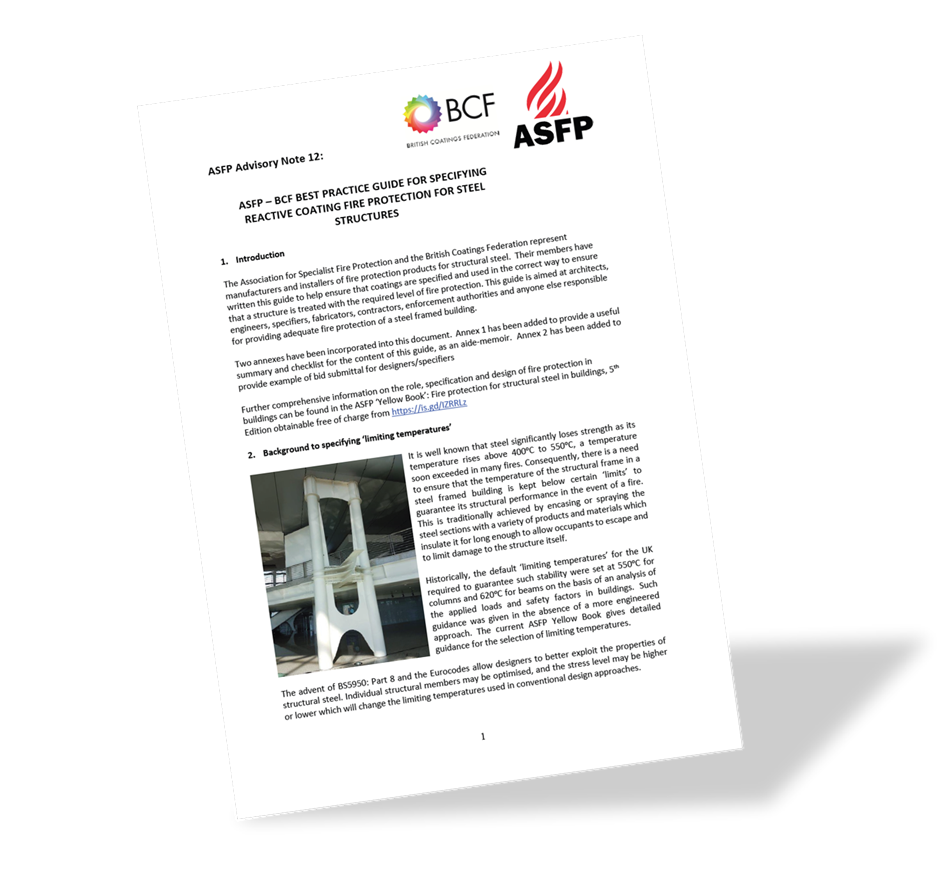
ASFP Advisory Note 12 - March 2021
ASFP Advisory Note 12 - ASFP - BCF Best Practice Guide for specifying reactive coating fire protection for steel structuresThis joint ASFP - BCF document outlines the best practice to follow when specifying reactive coating fire protection for steel structures.
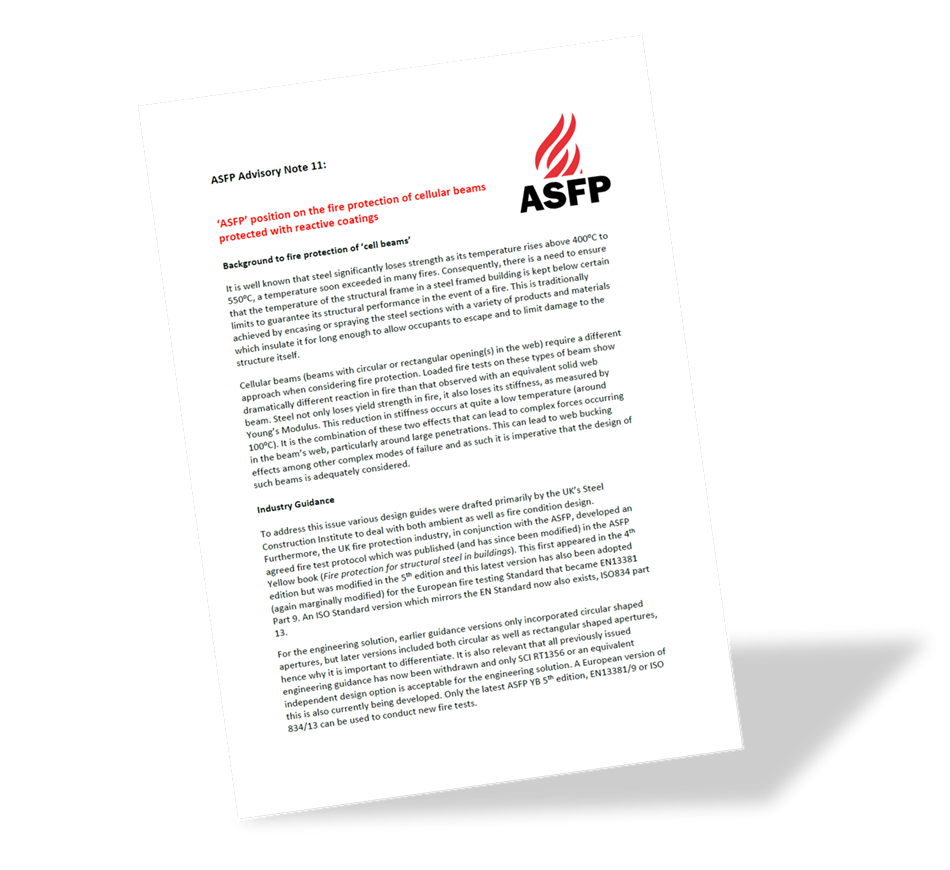
ASFP Advisory Note 11 - March 2021
ASFP Advisory Note 11 - ASFP position paper on the fire protection of cellular beams protected with reactive coatingsThis document outlines the ASFP position on the fire protection of cellular beams protected with reactive coatings and the assessment methods to be used.
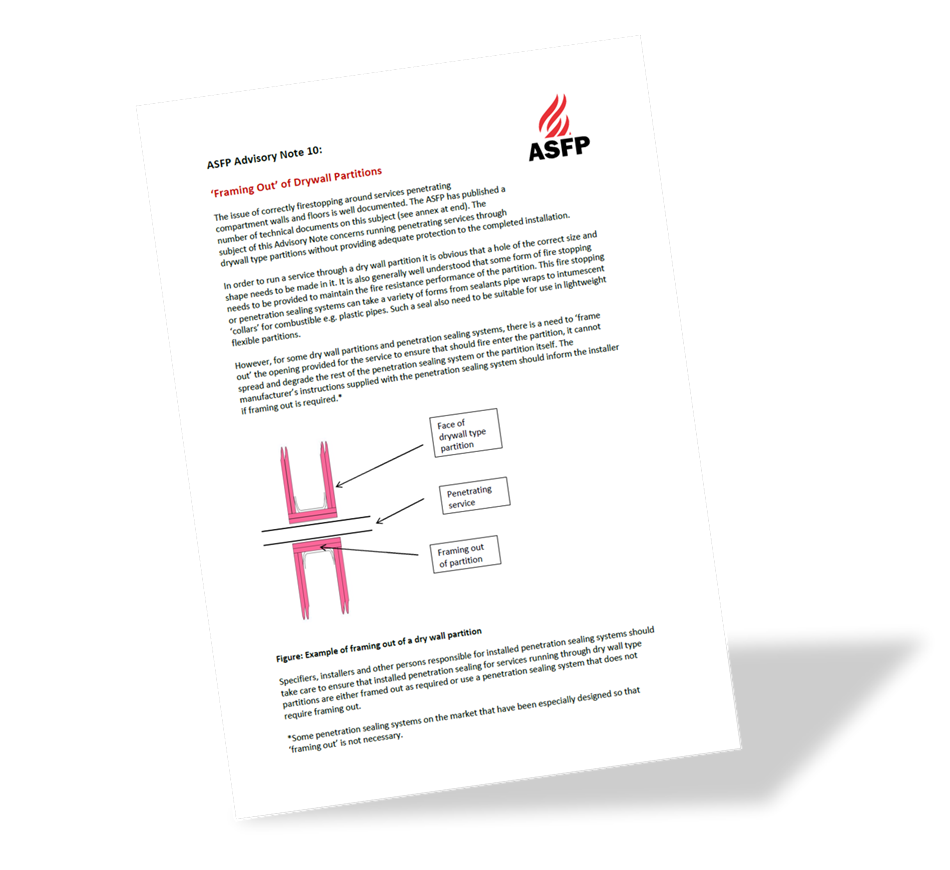
ASFP Advisory Note 10 - March 2021
ASFP Advisory Note 10 - Framing out of drywall partitionsThis document outlines the ASFP position on running penetrating services through drywall type partitions without providing adequate protection to the completed installation.
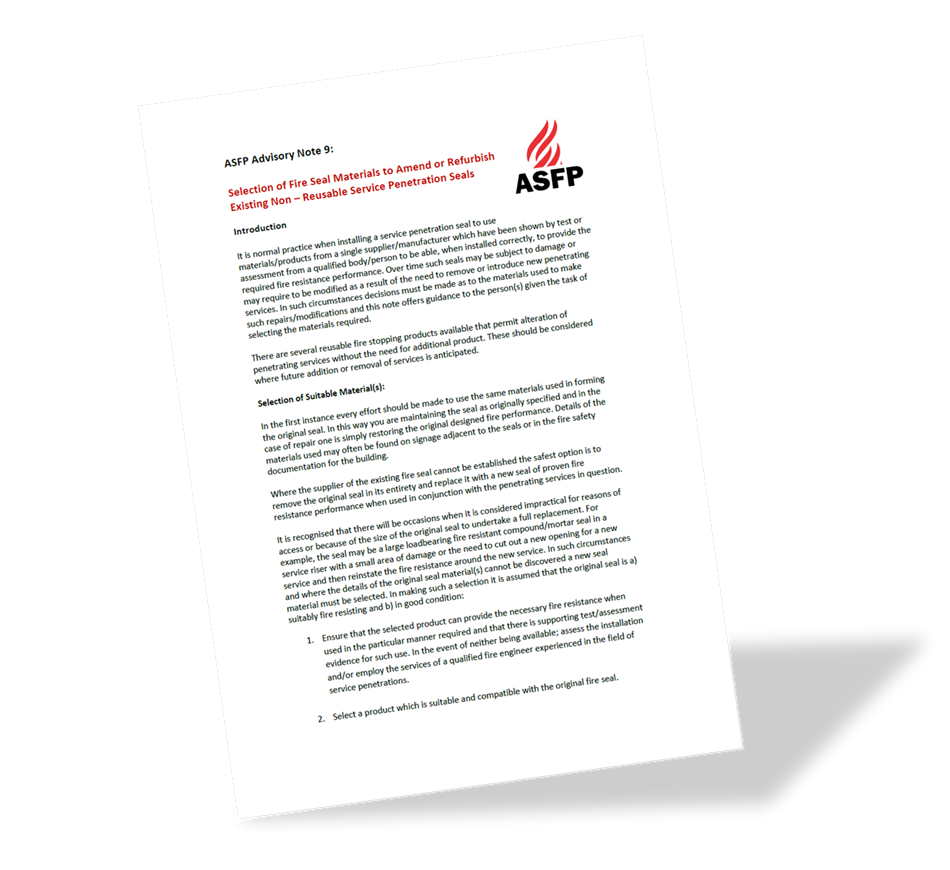
ASFP Advisory Note 9 - March 2021
ASFP Advisory Note 9 - Selection of fire seal materials to amend or refurbish existing non-reusable service penetration sealsThis document outlines the ASFP position on the materials to be used when making repairs/modifications to existing non-reusable service penetration seals.
ASFP Advisory Note 8 - March 2021
ASFP Advisory Note 8 - Issues surrounding service support centresThis document outlines the ASFP position on the centres of supports for cables and pipes running though penetration seals serving fire barriers.
ASFP Advisory Note 7 - December 2022
ASFP Advisory Note 7 - Horizontal linear gap seals used in curtain walling systemsThis document outlines the ASFP position on the test standard to be used when evaluating horizontal linear gap seals used in association with curtain walling systems.
ASFP Advisory Note 6 - March 2021
ASFP Advisory Note 6 - Use of firestopping components from different manufacturers/systemsThis document outlines the ASFP position on the acceptability to ‘mix and match’ components from different manufacturers, or different systems made by the same manufacturer, when installing firestopping.
ASFP Advisory Note 2 - January 2026
ASFP Advisory Note 2 - Fire stopping of combustible pipes with an internal diameter of 40mm or lessThis document outlines the ASFP position on firestopping combustible pipes with an internal diameter of
40mm or less, in relation to the requirements set out in section 9 of the statutory guidance to the building regulations in England & Wales, Approved Document B, vol. 1 for dwelling houses, and section 10 of vol. 2, for buildings other than dwelling houses.
40mm or less, in relation to the requirements set out in section 9 of the statutory guidance to the building regulations in England & Wales, Approved Document B, vol. 1 for dwelling houses, and section 10 of vol. 2, for buildings other than dwelling houses.
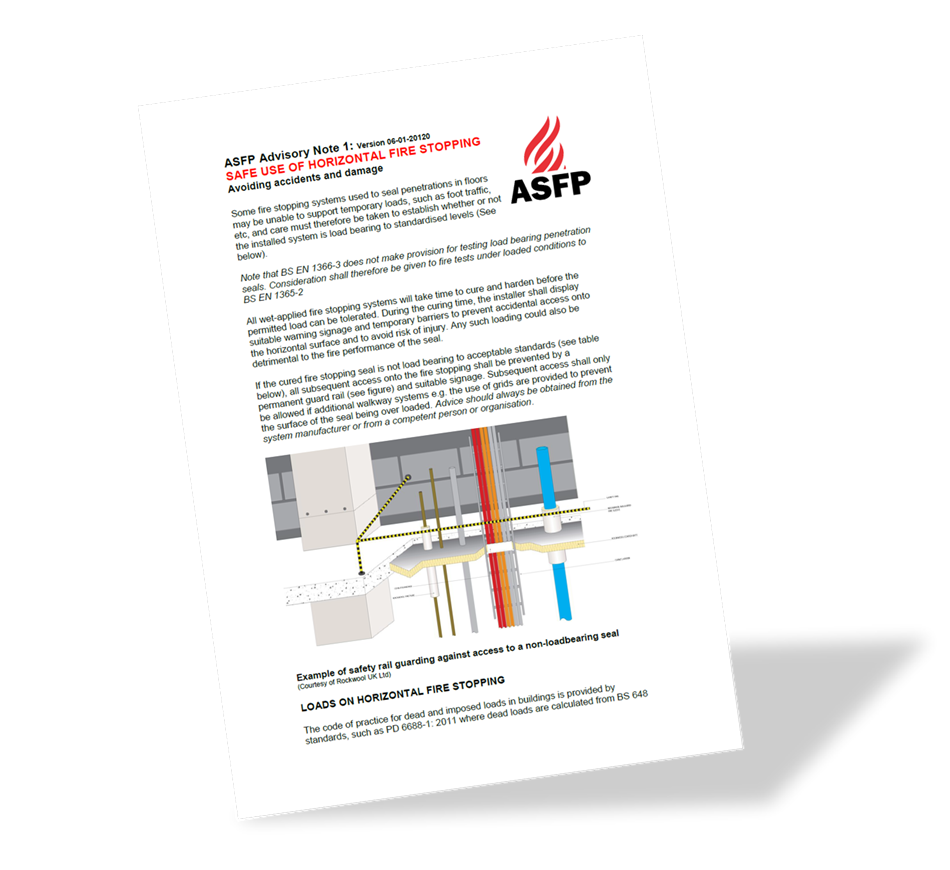
ASFP Advisory Note 1 - January 2020
ASFP Advisory Note 1 - Safe use of horizontal firestoppingThis document outlines the ASFP position on protecting non-loadbearing horizontal firestopping solutions to avoid accidents and damage.
ASFP Advisory Note 0.5 - January 2026
ASFP Advisory Note 0.5 - Using polyurethane foams in firestopping applicationsThis document outlines the ASFP position on using polyurethane foams in firestopping applications.
ASFP Advisory Note 0.4 - March 2021
ASFP Advisory Note 0.4 - Awareness guidance for the responsible person under the Regulatory Reform (Fire Safety) Order 2005This document provides guidance in relation to passive fire protection considerations to those who are considered a 'Responsible Person' under the Regulatory Reform (Fire Safety) Order 2005.
ASFP Advisory Note 0.3 - March 2021
ASFP Advisory Note 0.3 - Understanding the term ‘Competent Person’ in relation to the installation of passive fire protectionThis document outlines the ASFP position on the term ‘Competent Person’ in relation to the installation of passive fire protection and what may be considered acceptable.
ASFP Advisory Note 0.1 - January 2026
ASFP Advisory Note 0.1 - Fire and your legal liabilityThis document outlines the ASFP position on responsibilities and expectations when when it comes fire protection.
ASFP Advisory Note 0.0 - June 2026
ASFP Advisory Note 0.0 - ASFP Technical Guidance Explainer – Purpose and StatusThis Advisory Note provides an explanation on the purpose of the different types of ASFP guidance documents and how they should be used.
Guide to Inspecting Passive Fire Protection for Fire Risk Assessors - Edition 2
The newly published 2nd edition of the AFSP Guide to Inspecting Passive Fire Protection for Fire Risk Assessors contains updated text to assist Fire Risk Assessors carry out inspection of Passive Fire Protection (PFP) as part of a Fire Risk Assessment under appropriate fire safety legislation.It provides assessors with appropriate guidance for them to be able to verify that the PFP supporting means of escape is adequate. The legislation referred to above is designed to save lives in the event of a fire but does not necessarily cover the issue of property protection. Building owners or insurers wishing to ensure that the building is capable of withstanding the spread of fire for a period longer than necessary to evacuate its occupants should contact the ASFP for further guidance.
Ensuring Best Practice for Passive Fire Protection in Buildings - Edition 1
This guide is intended to offer architects, designers, constructors, building occupiers and others, practical and
helpful recommendations and selection criteria for the use of passive fire protection (PFP) systems in buildings.
It originated as the outcome of a three year ‘Partners in Innovation’ project, which was partly funded by the
Department of Trade and Industry (now Department of Business, Innovation and Skills) and the Office of the
Deputy Prime Minister (now Department of Communities and Local Government).
helpful recommendations and selection criteria for the use of passive fire protection (PFP) systems in buildings.
It originated as the outcome of a three year ‘Partners in Innovation’ project, which was partly funded by the
Department of Trade and Industry (now Department of Business, Innovation and Skills) and the Office of the
Deputy Prime Minister (now Department of Communities and Local Government).
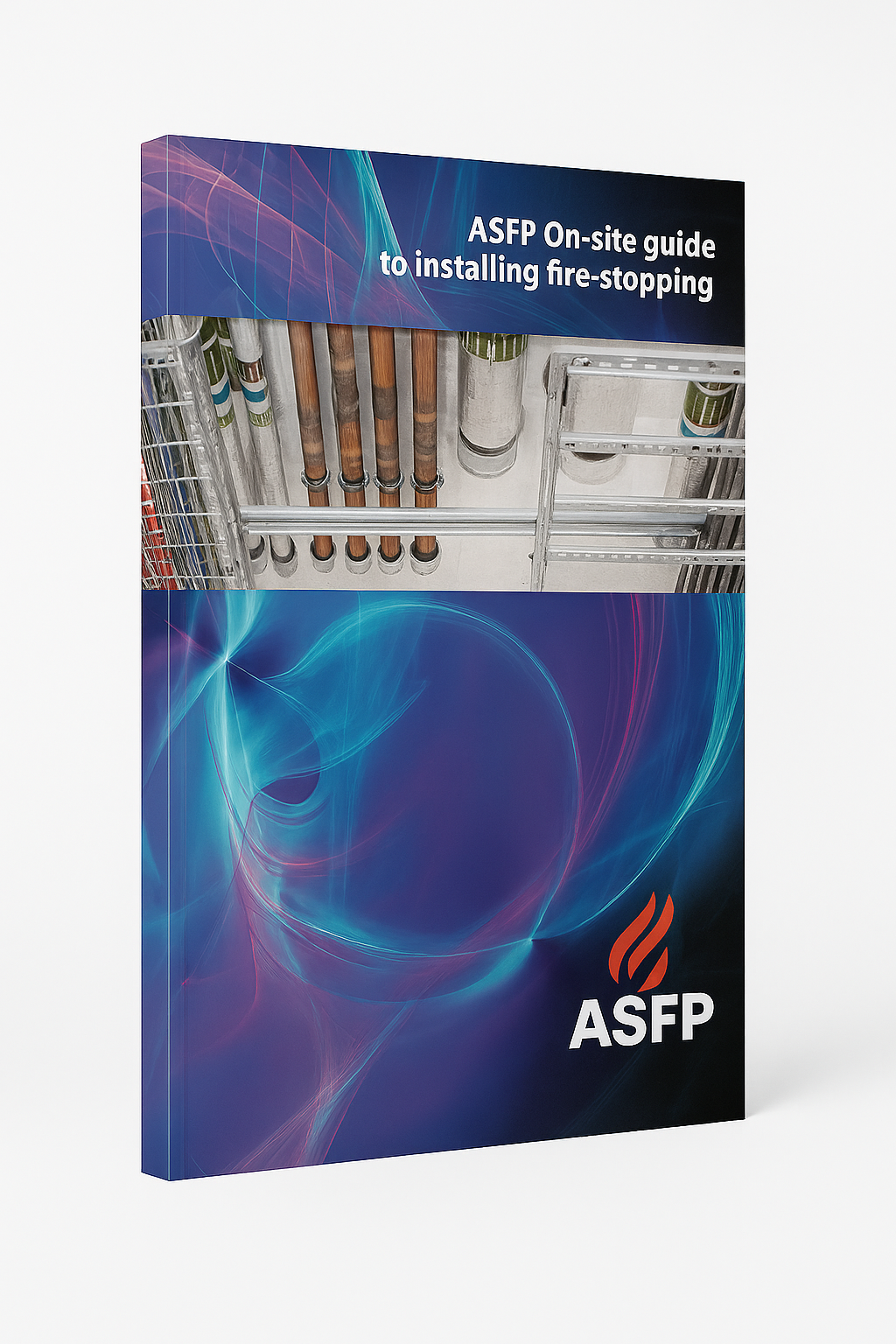
ASFP On-site guide to installing fire-stopping
This guide provides information on the do's and don't to consider when installing firestopping products such as cavity barriers, penetration seals for services and linear joint seals.
The Black Book - 1st Edition
Black Book - Active Fire Curtains: Compartmentation and Protected Routes: Guidance on specification, use and application of productThe ASFP 'Black Book' provides the most up-to-date independent guide to the provision of proprietary active fire curtains.
The Blue Book - BS Version - Volume 1 - 3rd Edition
Blue Book - Fire resisting ductwork: tested to BS 476 Part 24The ASFP 'Blue Book' is an industry guide for those involved in the specification, installation, inspection and verification of fire rated ductwork, it includes colour diagrams of the types and functions of various systems.This version provides complementary information to the EN version entitled 'Fire Resisting Ductwork: classified according to BS EN 13501 Parts 3 and 4'.Volume 1 of this book includes Product Data Sheets.
The Blue Book - BS Version - Volume 2 - 3rd Edition
Blue Book - Fire resisting ductwork: tested to BS 476 Part 24The ASFP 'Blue Book' is an industry guide for those involved in the specification, installation, inspection and verification of fire rated ductwork, it includes colour diagrams of the types and functions of various systems.This version provides complementary information to the EN version entitled 'Fire Resisting Ductwork: classified according to BS EN 13501 Parts 3 and 4'.Volume 2 contains Rules for Assessments.
The Blue Book - EU Version - 2nd Edition
Blue Book - Fire Resisting Ductwork: Tested to BS EN 1366 Parts 1, 8 & 9, Classification to BS EN 13501 Parts 3 & 4The ASFP 'Blue Book' is an industry guide for those involved in the specification, installation, inspection and verification of fire rated ductwork, it includes colour diagrams of the types and functions of various systems.This version outlines the tests and classifications from BS EN 13501 Parts 3 and 4 and is suitable for products which may have to be CE marked under the European Construction Products Regulation.This document provides complementary information to the UK version: Fire resisting ductwork: tested to BS 476 Part 24: Third Edition.
The Clear Book - 1st Edition
Clear Book - Fire Resisting GlazingThe ASFP 'Clear Book' is a new publication that covers the design, manufacture, installation, and maintenance of glazed fire resisting systems. The principal applications cover internal glazed fixed lights, internal partitions and external curtain walling.
The Green Book - Volume 1 - 1st Edition
Green Book - Fire Door Systems: Guidance on specification, application and managementThe ASFP 'Green Book' is a new publication that brings together essential guidance on the specification, due diligence and management of fire door systems throughout the design, planning, procurement and early delivery phases of residential and mixed-use commercial buildings. It centres on doors designed to provide fire protection used for compartmentation purposes, and both fire and smoke separation for means of escape. The intention of this document is to highlight how early planning at specification stages can deliver long-term safety, performance benefits and resilience across the building lifecycle.
The Grey Book - Volume 1 - 3rd Edition
Grey Book - Fire Dampers In accordance with BS EN 15650The ASFP 'Grey Book' Volume 1 of the 3rd edition contains updated practical advice so that damper manufacturers, system designers and installers are able to consider the appropriate issues and at the design stage, to make the necessary decisions to ensure that dampers will function as intended by current regulations.
The Grey Book - Volume 2 - 1st Edition
Grey Book - Smoke Control Dampers in accordance with BS EN 12101-8The ASFP 'Grey Book' Volume 2 is a new publication that is intended to make the specification and installation of smoke control dampers, tested and classified to harmonised European procedures, easier for designers and installers. It also provides a guide for inspectors. It emphasises the importance of installing smoke control dampers as recommended by the manufacturer and is intended to ensure the use of smoke control dampers that have been fire tested for the appropriate application.
The Purple Book - 3rd Edition
Purple Book - Fire Resisting Partitions: A guide to internally framed non load bearing partitionsThe ASFP 'Purple Book' is the updated definitive guide to the provision of proprietary materials and systems used to provide fire rated partitions. This edition includes references to the removal of BS 476 as a means for satisfying Approved Document B and other statutory guidance documents.This version also includes guidance on what to consider when partitions are fitted with services which may impose a load on the partition e.g. fire dampers, penetrating services and other items such as fire doors and glazing. It contains a section on fire design which brings together the various elements and demonstrates the critical role that walls play and the need to consider what is attached or passing through the wall when they are being designed.
The Red Book - 4th Edition
Red Book - Linear join seals, penetration seals & cavity barriersThe ASFP 'Red Book' It is the definitive guide to the provision of proprietary materials and systems used to provide fire stopping and sealing of penetrations within fire separating elements to comply with building regulations.This publication only includes data sheets for products which have been third party certificated and issued with an ASFP URN (Unique reference number).
The Yellow Book - Volume 1 - 6th Edition
Yellow Book - Fire protection for structural steel in buildingsThe ASFP 'Yellow Book' Volume 1 of the 6th edition contains an updated text for designers, specifiers and installers of structural fire protection. As such this text supersedes the equivalent sections within the Yellow book 5th edition. The 6th edition includes new default critical temperatures, and a revised methodology for calculating protection requirements for beams with web openings.The 5th edition is also maintained on the ASFP’s website, solely for information.
The Yellow Book - Volume 2 - 6th Edition
Yellow Book - Fire protection for structural steel in buildingsThe newly published Volume 2 of the 6th edition deals specifically with the testing and assessment of reactive (expanding) coatings used for the passive fire protection of structural steel.
The Yellow Book - Volume 1 - 5th Edition
Yellow Book - Fire protection for structural steel in buildingsThe ASFP 'Yellow Book' 5th edition is maintained on the ASFP’s website solely for information on the testing and assessment of structural passive fire protection products.
ASFP Technical Guidance Document 23 - December 2023
ASFP Technical Guidance Document 23 - Code of Practice for the design, installation & management of passive fire protection in IrelandThis Code of Practice is written to assist compliance with Irish Building Regulations & Building Control Regulations under the Building Control Act 1990 and Fire Safety Management under the Fire Services Acts 1981 & 2003.
ASFP Technical Guidance Document 21 - September 2023
ASFP Technical Guidance Document 21 - UKCA / CE Marking of Operable Fabric CurtainsFollowing the re-citing of EN 16034:2014 in the Official Journal of the European Union (OJEU) on 28 October 2016, CE marking of operable fabric curtains became Mandatory under European Union Construction Product Regulations (CPR) from 01 November 2019.The CE marking of operable fabric curtains is based on the harmonised product standard BS EN 16034:2014 can only be applied in combination with either BS EN 14351-1:2006 + A2:20161 or BS EN 13241:2003 + A2:20162, and should be applied in instances where the scope of BS EN 16034:2014 applies.
ASFP Technical Guidance Document 20 - January 2022
ASFP Technical Guidance Document 20 / BESA VG005 / ADCAS TGD 01/20.08 - Fire test standards and the Construction Products Regulation in relation to fire resisting ventilation and smoke control ductworkFollowing the implementation of the construction products regulations (CPR) in July 2013, it is a legal requirement to comply with any harmonised European product standard and provide tested products covered by that standard. With regards to fire resisting ventilation and smoke control duct sections not all the required standards are published and consequently this limits what can be supplied. The purpose of this Guidance document is to provide an understanding of what these limitations are, when they will change and what can individual stakeholders do in the intervening period.This document has been written in collaboration with the trade bodies ASFP, BESA and ADCAS to provide an industry wide position.
ASFP Technical Guidance Document 19 - February 2026
ASFP Technical Guidance Document 19 - Fire Resistance Test for ‘Open-State’ Cavity Barriers used in the External Envelope or Fabric of BuildingsThis test method has been drafted by, a sub-group of ASFP Task Group 3 (Firestopping) which in turn reports to the ASFP Technical Committee. It has been drafted in response to a need identified by the ASFP for a test method to evaluate the fire resistance of ‘open-state’ cavity barriers. The method is also intended to assist certification bodies to develop technical schedules allowing for the third party product certification of ’open-state’ cavity barriers.
ASFP Technical Guidance Document 18 - January 2014
ASFP Technical Guidance Document 18 - Code of practice for the installation & inspection of fire resisting duct systemsThis Code of Practice has been written to assist installers and others involved in the installation and inspection of fire resisting duct system. The aim of the code is to ensure that installed fire resisting duct system will perform as required in the event of fire and will continue to do so for a reasonable period during the life time of the building.
ASFP Technical Guidance Document 17 - May 2013
ASFP Technical Guidance Document 17 - Code of practice for the installation and inspection of fire stopping systems in buildings: Linear joint seals, penetration seals, small cavity barriersThis Code of Practice has been written to assist installers and others involved in the installation and inspection of fire stopping systems in buildings. The aim of the code is to ensure that installed firestopping systems will perform as required in the event of fire and will continue to do so for a reasonable period during the life time of the building.
ASFP Technical Guidance Document 16 - June 2010
ASFP Technical Guidance Document 16 - Code of Practice for Off-site Applied Thin Film Intumescent CoatingsThis document was previously published by the Steel Construction Institute (SCI Publication P160) and is now included as an ASFP Technical Guidance Document. It is unchanged from the last version published by SCI and is still current industry guidance.
ASFP Technical Guidance Document 15 - March 2022
ASFP Technical Guidance Document 15 - Code of practice for the installation & inspection of sprayed non-reactive coatings for the fire protection of structural steelworkThis Code of Practice has been complied to enable the specifier and installers of fire protection systems using sprayed non-reactive coatings to ensure that these systems are specified and installed in a manner that assures their effectiveness and provides confidence that they will perform as required in the event of fire and continue to do so for a reasonable period during the life time of the building. That is, the product is fit for purpose and will provide all the intended functions in fire.
ASFP Technical Guidance Document 14 - June 2009
ASFP Technical Guidance Document 14 - Code of practice for the installation and inspection of board systems for the fire protection of structural steelworkThis Code of Practice has been issued to enable specifiers and installers of fire protection systems incorporating boards and slabs to ensure that these systems are specified and installed in a manner that assures their effectiveness when used for the fire protection of structural steel. It will provide confidence that they will perform as required in the event of fire and also continue to do so for a reasonable period during the lifetime of the building.
ASFP Technical Guidance Document 13 - March 2010
ASFP Technical Guidance Document 13 - Code of practice for the over-cladding of reactive coatings when used as fire protection to steel structural sectionsThis Code of Practice has been issued to provide guidance whether external cladding systems can be close fitted to structural steel surfaces which are protected from fire by intumescent reactive coatings.
ASFP Technical Guidance Document 11 - September 2014
ASFP Technical Guidance Document 11 - Code of practice for the specification & on-site installation of intumescent coatings for fire protection of structural steelworkThis guidance document considers the entire process of fire protection using intumescent coatings, but its prime objective is to establish procedures for the specification, application and control of intumescent coatings at site. Not only will these procedures ensure that the required level of fire protection is provided for the structure, but they should provide the evidence necessary to satisfy the ‘responsible person’ that the installation has been correctly carried out.
ASFP Technical Guidance Document 10 - June 2008
ASFP Technical Guidance Document 10 - Code of Practice for the refurbishment & upgrading of fire protection of Structural steelworkThis Code of Practice provides guidance on the refurbishment process of of fire protection of Structural steelwork.
ASFP Technical Guidance Document 8 - June 2026
ASFP Technical Guidance Document 8 - Code of practice for junctions between different fire protection systems when applied to load bearing structural steel elementsThis recently updated Code of Practice provides guidance on how to deal with the junction between different fire protection systems when applied to load-bearing structural steel elements.
ASFP Technical Guidance Document 2 - March 2010
ASFP Technical Guidance Document 2 - Code of practice for the use of sprayed mineral coatings for the fire protection of structural steel. Based on BS 8202 Part 1 for the mechanical retention of sprayed mineral coatingsThis guidance note is for use by specifiers and specialist contractors to ensure all applications of a
nominated sprayed mineral coatings are based upon identical specifications for a specific contract.
nominated sprayed mineral coatings are based upon identical specifications for a specific contract.
Competence in passive fire protection design & specification activities - Benchmarking
Industry benchmarking document outlining competence standards for Passive Fire Design & Specification.
Competence in passive fire protection design & specification activities - Pathways for technical specialists
Competence pathways for technical specialists working in Passive Fire Design & Specification activities.
Competence in passive fire protection sales & distribution activities - Benchmarking
Benchmarking document defining competence criteria for Passive Fire Sales & Distribution roles.
Competence in passive fire protection sales & distribution activities - Pathways for Counter & Specialist Staff
Competence pathways for counter staff and specialist sales staff working in Passive Fire Sales & Distribution.
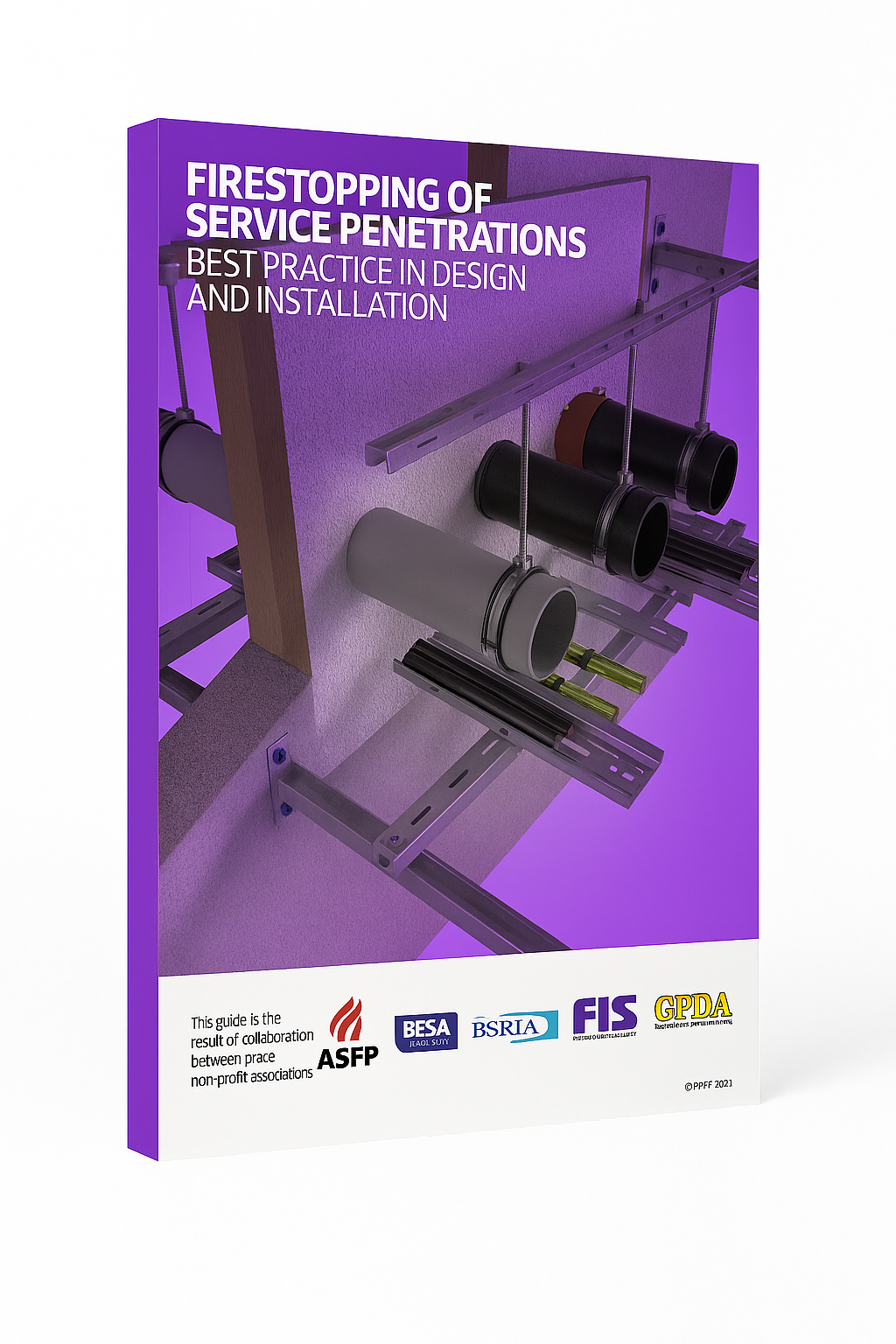
Firestopping of Service Penetrations Guide - Best Practice in Design and Installation
This guide produced by FIS is the result of a collaboration between ASFP, BESA, BSRIA, FIS and GDPA.
PFPF Guide to Undertaking Technical Assessments - 2021
Passive Fire Protection Forum (PFPF) - Guide to undertaking technical assessments of fire performance of construction products based on fire test evidenceThis document defines a framework and competency standards for undertaking of assessments based on test evidence for passive fire protection products. It was originally produced in 2000, revised in 2019 and then revised as part of a systematic review process.